What is an E-commerce Customer Data Platform (CDP)?

Do you know that 71 percent of your customers expect your e-commerce store to offer them personalised experiences? At the same time, 76 per cent of them are likely to get frustrated if you fail to personalise their interactions.
With outstanding strategies and technology, ensuring personalisation will not be a huge challenge, right?
Most e-commerce businesses do not have complete visibility of their customers. All their customer data are scattered across silos, resulting in the unavailability of a 360-degree customer view. Therefore, they cannot efficiently segment their customers or offer personalisation.
Has the data silos in your business ever been one of your primary concerns? Then, it is time to bring all your data together with an e-commerce Customer Data Platform(CDP).
What is a Customer Data Platform (CDP)?
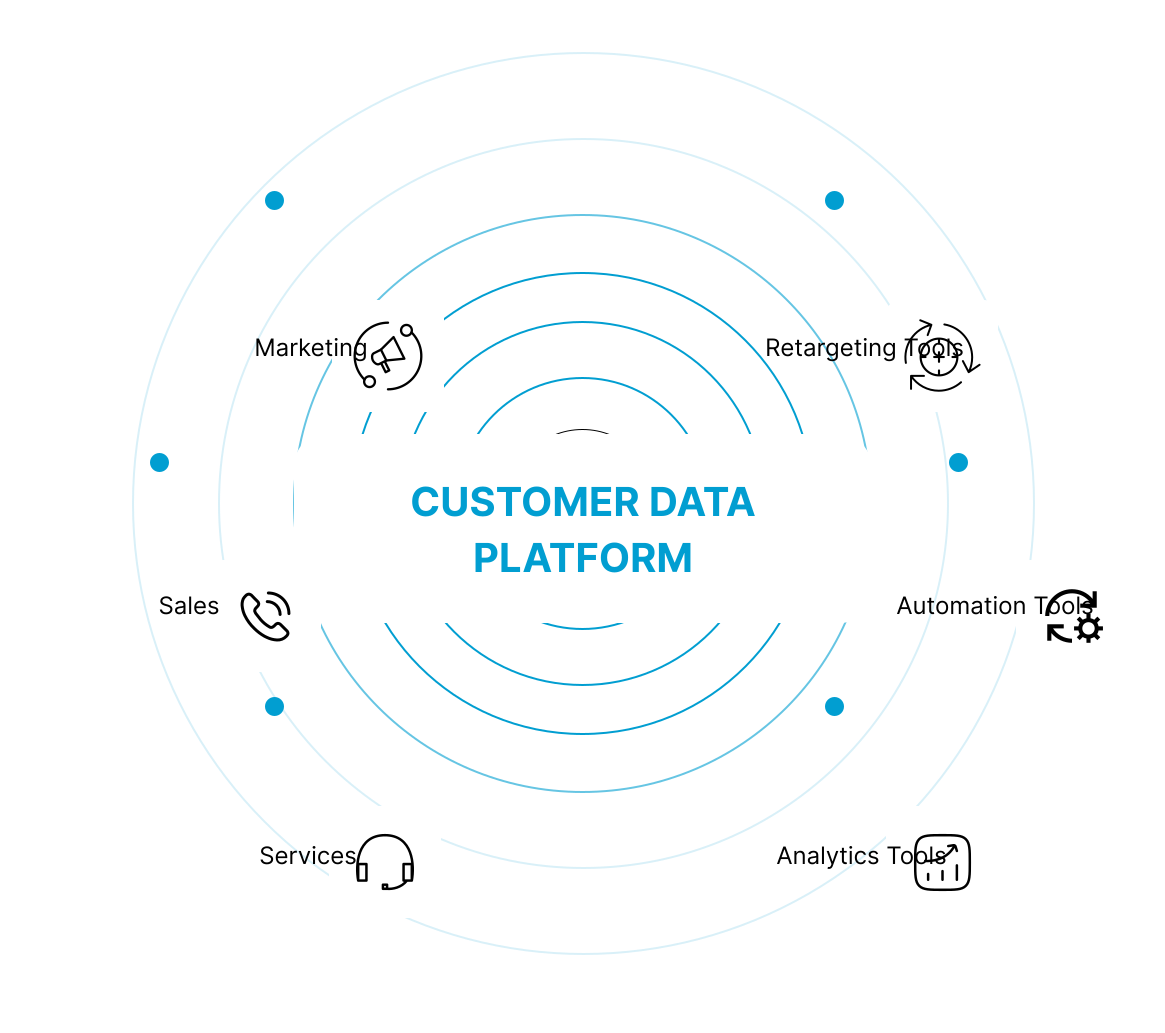
A Customer Data Platform is software that centralises customer data from different sources. For instance, it combines customer data from websites, CRMs, and marketing touchpoints. Integrating data from various channels creates a complete picture of each customer.
TechMonk is a leading customer data platform for e-commerce businesses to connect data sources. It ensures seamless data flow and integration. Wondering how it will benefit your e-commerce store? You can easily track customer behaviour and interactions and then make informed decisions.
3 Types of Customer Data Platforms
Let us explore the three types of customer data platforms.
1. Data CDPs
Data CDPs focus only on collecting and storing data. These systems gather and organise data from various sources in a structured format. Such platforms are ideal for large organisations that process vast amounts of data.
Data CDPs ensure your data is accessible and ready for analysis. It can be used as a starting point for building customer insights and updating your marketing practices.
2. Marketing Cloud CDPs
Marketing Cloud CDPs are ideal for marketing initiatives as they integrate with your marketing tools. It helps you automate their efforts by showing your customer preferences. You can use Marketing Cloud CDPs to create targeted campaigns that drive engagement and conversions.
3. Analytics CDPs
Analytics CDPs is a customer data platform that focuses on data analysis and insights. It provides the right tools for analysing data and discovering trends, as well as predictive models and customer segmentation.
What is CDP Used For?
It's important for e-commerce businesses to understand their customers. A customer data platform gives you a single view of your customers. Therefore, you can see their entire journey and personalised experiences.
Here are the benefits of customer data platforms like TechMonk in e-commerce.
1. Offers A Single View Of Customers
Since customer data platforms have data from all sources, they offer a complete view of each customer. This allows you to understand their behaviour and preferences better. With a single view, businesses can track customer interactions across multiple channels.
Here's an example of how TechMonk offers 360-degree customer visibility through its dashboards.

2. Personalisation of Content, Messages, And Recommendations
We have already discussed how important personalisation is in e-commerce. CDP allows you to personalise content and messages according to individual user preferences. Therefore, your interactions with your customers become more relevant and engaging.
With a customer data platform, you can ensure that you deliver the right message to the right person at the right time. Personalised marketing improves customer experience and customer satisfaction and drives sales in e-commerce.
3. Facilitates Customer Journey Orchestration
Customer journey orchestration means managing the entire customer journey across all touchpoints. With a CDP, you can easily map out the customer journey and identify interaction points. As a result, you can ensure coordination between different marketing channels and teams. Moreover, it helps you build customer loyalty and retention from satisfied customers.
4. Predictive Marketing
CDP analyses past customer interactions to predict customer behaviour in the future. It offers insights for predictive marketing that address future customer needs.
If you can predict customers future behaviour and provide solutions, you will rise ahead of the competition. Predictive models also improve businesses marketing strategies and drive growth.
5. Improves Operational Efficiency
Customer data platforms eliminate the need for different data silos by bringing together customer data. Therefore, various teams can collaborate efficiently and access customer data for various operations. As a result, it improves operational efficiency and profitability for businesses.
How Does a Customer Data Platform (CDP) Work?
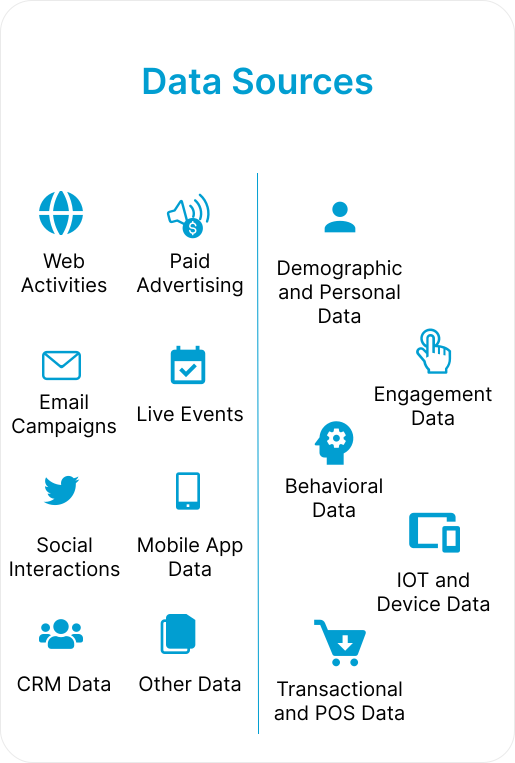
A CDP collects data from different sources to merge into a single customer profile. It draws information from websites, mobile apps, social media, and other systems. The platform organises it in a structured format, making it easier to analyse.
With identity resolution, CDPs can match data points back to the individual customers. Therefore, it ensures accuracy. From there, businesses are able to use the organised data to create personalised marketing campaigns and enhance their relations with the customer.
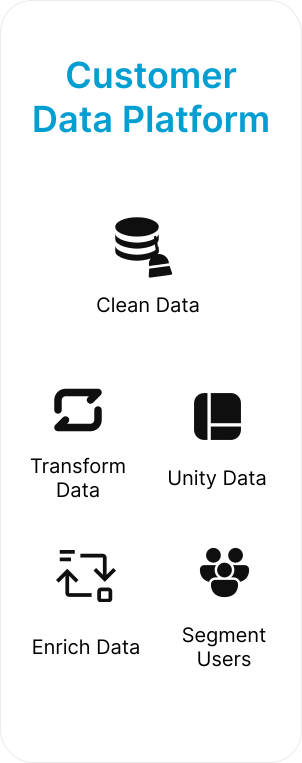
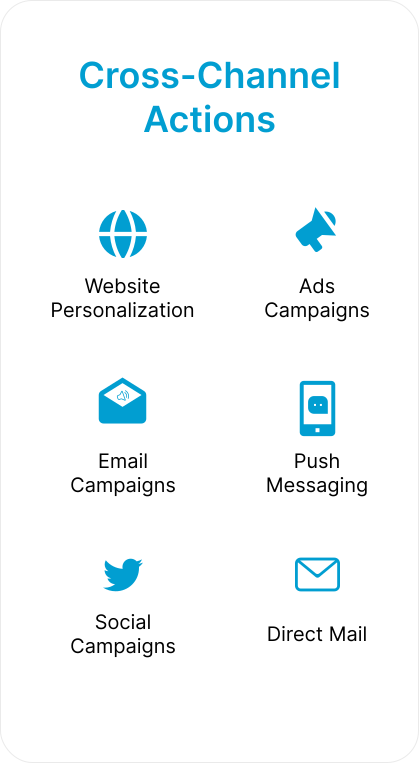
Here's how a CDP manages customer data to create personalised customer journeys.
1. Brings All Your Customer Data Together
You collect data from many places—your store, app, emails, ads, and support tools. A Customer Data Platform consolidates all customer data in one place. It gathers details like emails, purchases, product views, and browsing activity across devices and sessions. This helps you build a clear and complete profile for each customer.
2. Connects Activity Across Devices
Your customers move between phones, tablets, and computers. A CDP links these actions using emails, phone numbers, cookies, or device info. This way, you see the full path—from when they click an ad on mobile to when they finish buying on a laptop. Without this, their journey stays scattered and hard to track.
3. Make Your Data Work Together
A CDP pulls all your data into one system. This includes info from your CRM, sales, website activity, and more. With everything in one place, your tools, like emails, ads, or analytics, can work better together. This helps you send the right messages, recommend the right products, or follow up at the right time.
4. Facilitates Real-Time Personalisation
Your CDP updates data as soon as customers take action. It connects with your marketing tools to show real-time product suggestions, personalised emails, or custom ads. For example, if someone leaves a cart behind, they might get a reminder email the next day and see a related ad later.
5. Get Insights and Improve Segments
With all the data organised, you can spot loyal customers, at-risk ones, or buyers who use discounts. You can build strong audience groups, track what works, and improve your marketing results.
6. Keeps Your Data Clean
A customer database platform keeps your data accurate by removing old info, fixing duplicates, and filling in missing parts. This makes your campaigns more reliable and helps you trust your results.
Consolidate Valuable Customer Data From Multiple Sources With A Few Clicks.
Try TechMonkHow Can An E-commerce Brand Turn Customer Data into Repeat Sales?
Let's say you run an e-commerce brand and want to understand your customers better and improve your marketing, but your data sits in different places.
- Shopify tracks your purchases.
- Klaviyo manages your email campaigns.
- Facebook handles retargeting.
- Google Analytics logs customer behaviour.
But none of these tools talk to each other.
Consider a customer, Emily, who might click on a Facebook ad, browse your website, add items to the cart, and then leave without buying. A few days later, they receive a generic email. It feels random. There's no context or timing. Moreover, you can't tell what worked or why they dropped off.
This is where a Customer Data Platform changes everything.
- Unified Customer Profiles: The CDP brings all your tools together. It builds one complete profile for each customer. You see what they viewed, what they clicked, what emails they opened, and what they purchased.
- Smarter Segments: You can create segments like: first-time visitors who abandoned their cart, loyal buyers who spent over $200, and customers who haven't returned in 90 days. This helps you run better, more personal campaigns.
- Real-Time Customer Journey Personalisation: Emily, the customer who browsed coats but didn't buy? With an e-commerce CDP, the same shopper gets a follow-up email within hours: "Still thinking about this winter jacket? Here's 10% off just for you." Later, they see the same jacket on Instagram and make the purchase. A week later, they get an email with product picks based on what they bought.
- Better Results: You see higher conversion, better email clicks, and more repeat purchases. And your CDP does it all automatically, without changing your product or hiring more people. It just helps you act on the data you already have.
What Is The Difference Between A CDP And Other Data Management Solutions?
CDPs are different from other types of data management platforms for several reasons. Let us explore how it varies from different data management solutions.
Customer Data Platform vs. Customer Relationship Management
Customer data platforms (CDPs) and customer relationship management (CRM) are different solutions. CDPs are designed mainly to connect data from various sources to make a single record of a customer.
On the other hand, CRM stands for Customer Relationship Management software, which handles customer interactions. It holds data on customers, including their contacts and interactions, such as sales or support calls.
Customer Data Platform Vs. Data Management Platform
CDPs centre of attention is on first-party data and customer identity graphs, while DMPs are on third-party data for advertising. CDPs are effective for marketing because they give a unified view of every customer. The DMPs are widely used for audience segmentation and targeted advertising campaigns.
Customer Data Platform Vs. Marketing Automation Platform
CDPs consolidate unique customers' information; a customer database delivers a comprehensive view of customers. On the other hand, MAPs include marketing automation through tasks such as emails and social media accounts. Whereas MAPs concentrate on the tactical level, CDPs supply the information needed to create efficient marketing tactics.
Customer Data Platform Vs. Data Warehouse
CDPs and data warehouses can be considered data repositories but do two different things. CDPs are centred on assembling the unified customer database and providing applicable directives for marketing strategies. However, data warehouses are intended to store large volumes of data for reporting and analysis.
How To Choose An E-commerce CDP?
- Participate Internal Stakeholders
- Determine Your Use Cases
- Identify The Points To Gather Data From
- Compare The Available Vendors
- Choose An Option With Maximum Value
It further requires internal stakeholders' contribution to the decision-making process. This helps ensure that the selected platform will accommodate the needs of all departments.
Identify the specific usage scenarios and decompose them into covered chunks with defined data. This will assist you in comparing the available vendors and selecting the one that will meet your needs.
You must consider ease of use, integration with other systems, and cost when choosing.
1. Participate Internal Stakeholders:
When selecting a CDP, engage the internal stakeholders. This ensures that the platform addresses the requirements of all the firm's departments, including the marketing and IT departments. Gather input from other teams to see what they expect from development and what they need.
This will assist you in highlighting some of the aspects and functionality relevant to your business operations. If you involve people affected by your decision, it becomes easier to implement and adopt the CDP.
2. Determine Your Use Cases:
Understanding your use cases can be a way to determine which CDP is suitable for your company. Evaluate what you need from it, how you will employ it, and what you hope to accomplish with it. It will assist you in comparing the different features and the capacity of the several CDPs available in the market.
Identify what data you will require for each use case and the data that will enable you to make the required decision. Here, you understand your use cases and can select a CDP that aligns with your business goals.
3. Identify The Points To Gather Data From:
Knowing where to retrieve data is especially important when working with CDP. Determine which data sources to include in the platform, such as websites, mobile applications, and other SNSs. Consider the kinds of data required and other requirements, including behavioural and transactional data, among others, and customer interactions.
This will help you select a CDP to aggregate your data into one platform. Sometimes, it might be simpler to quickly run through some core questions about your data and approach to capture a more comprehensive view of your customers.
4. Compare The Available Vendors:
Vendor comparison is a critical aspect that is usually followed to make the right decisions when selecting a CDP. The benefits of this model are best assessed by comparing each vendor's features and capabilities to the price they charge for services. Some include usability, compatibility or communication with other systems, and customer service.
Opt for vendors that have a good reputation and satisfied customers. Some of the factors within this category include the ability to compare vendors and then select the CDP that offers the most value.
5. Choose An Option That Gives Maximum Value:
As with any vendor you select to be part of your agency's processes, determine the value a CDP would bring to your business; therefore, one needs to search for a platform equipped with the features and capability that one needs with an affordable price tag.
Consider the possible cost that the business entity will incur when considering the benefits set to be delivered by the CDP towards achieving overall organisational objectives.
Look for a CDP that is simple to work with and one that will best fit your current set-up. CDP can help boost marketing and customer experience by choosing the correct value.
Try TechMonk: An Exceptional CDP For E-Commerce
TechMonk helps its customers build and run high-scale consumer businesses by powering autonomous agents that optimise every consumer interaction, creating personalised customer journeys and experiences. TechMonk's platform is built on agentic workflows that use advanced AI Agents and a comprehensive full-stack marketing toolkit to reduce customer acquisition costs, improve customer lifetime value, increase repeat purchases, and build customer intelligence.
They have everything under the same roof, from advanced AI agents to marketing automation tools, including CDP, customer segmentation tools, and ticket management support.

Here is what TechMonk's customer data platform helps you with.
- Unified Customer View: TechMonk's CDP brings all your customer data into one place. It collects information from every touchpoint and builds a complete profile for each shopper. This helps you understand their full journey. You can then create personal and relevant experiences that boost engagement and drive more sales.

- Real Time Personalization: The CDP uses live data to track what your customers do and what they like. This means you can send them offers, product recommendations, and messages right when they need them. It makes your customer experience feel more timely and personal.
- Smarter Marketing Automation: The CDP connects smoothly with your marketing tools and sales channels. It uses customer actions to trigger campaigns automatically. You spend less time on manual work and more time seeing better results. Your campaigns become more accurate, and your marketing becomes more effective.
- Clean and Compliant Data: TechMonk's CDP keeps your data clean, organized, and accurate. It checks and updates information constantly. You can not just trust your data but also make decisions with confidence. It also helps you stay in line with privacy rules and regulations.

- Smarter AI Agents: TechMonk's AI agents use the unified customer data to respond better in multiple languages. They understand context, answer complex questions, and make each conversation feel more personal. This helps your support team become faster and more efficient.
Here is how e-commerce businesses benefit from TechMonk's customer data platform.
- Powers customer intelligence in conversations and AI-powered campaigns with a 360-degree view of customer data.
- Segment the audience based on essential criteria, empowering you to implement targeted marketing strategies that improve ROI by 30%.
- TechMonk integrates with various business tools, making it the perfect solution for deepening a company's understanding of its core customer base.
- Centralising customer data reduces data management costs by 40%.
Conclusion
Get the most out of your customer data to fuel personalised campaigns with TechMonk.
Book DemoFrequently Asked Questions
Have another question? Please contact our team!
No, they are not the same – CDPs are used for creating long-term customer relationships, using real-time, individual communications, for example, while DMPs are used to gear targeting to particular marketing campaigns.