Understanding ROAS: A Key Metric for E-Commerce Growth?

Key Highlights
ROAS Meaning: ROAS measures how much revenue an e-commerce business earns for every rupee spent on advertising.
ROAS Calculation: ROAS is calculated by dividing total ad revenue by total ad spend for a campaign, ad group, or account.
ROAS Challenges: Accurate ROAS tracking is difficult due to multiple touchpoints, delayed purchases, and limited offline attribution.
ROAS Drivers: Ad relevance, creative quality, and precise audience segmentation directly influence ROAS performance.
Improving ROAS: Better creatives, smart bidding, drip campaigns, retargeting, and data-driven targeting increase returns.
Have you ever wondered why some e-commerce ads convert effortlessly while others struggle to show results?
Digital advertising has become a clear focus for e-commerce brands because it drives measurable action, not just visibility. Still, many brands fail to see strong ROAS from their campaigns due to poor targeting and generic messaging.
Here are a few key statistics to note:
- E-commerce brands in India spend 61 percent of their ad budget on digital media
- Only about half of that spending goes to television ads
The real gap lies in personalization. When brands reach the right customers with relevant ads, ROAS improves naturally.
This blog breaks down what ROAS means in e-commerce and shares practical ways to improve ad performance and returns.
What is ROAS in E-Commerce?
ROAS stands for return on ad spend. This marketing metric gives e-commerce businesses an idea of the amount they earn for each rupee they spend on advertising. Simply put, ROAS is the ROI (Return on Investment) for digital advertising.
E-commerce businesses need to measure ROAS to understand the effectiveness of the advertising campaigns. ROAS also lets you understand the effectiveness of your advertising messages in connecting with your prospects. A higher ROAS indicates that your marketing messages work well with your prospects or potential customers.
How to Calculate ROAS?
You can measure ROAS in your Google ads account at various levels. For instance, you can measure it at the account, ad group, or campaign levels. You need to know the amount you spend and earn from your ads at that particular level to calculate ROAS.
It is easy for your businesses to know their advertising spending and revenue generated from the ad platform itself. At the same time, you might need to combine data from different sources, like Meta and Google ads, if you are measuring the results of an individual campaign you run on these platforms.
ROAS is easy to calculate using its simple formula. ROAS equals the total conversion value from your ad divided by the amount spent on the ad. Conversion value refers to the revenue you earn from a conversion that the ad brings you.
Here is the formula for ROAS.
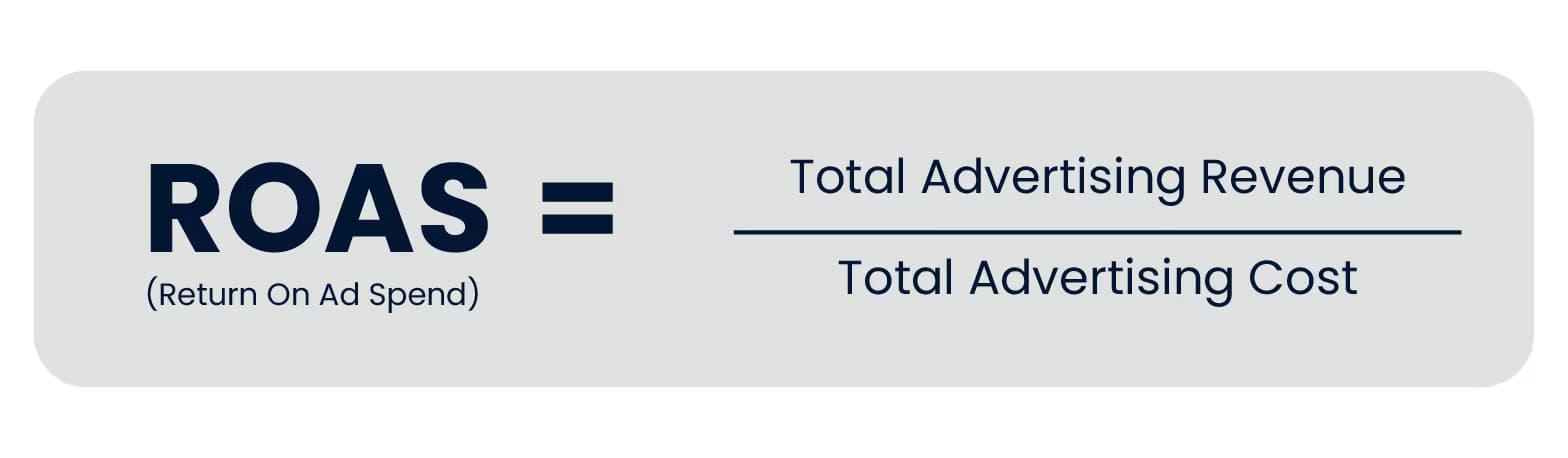
Let us break it down with a simple example. Consider that you spend 5000 rupees on an advertisement for a product and earn 20000 rupees per unit of the product. Then, the return on ad spend is 4.
You can also represent ROAS as a percentage by multiplying it by 100.
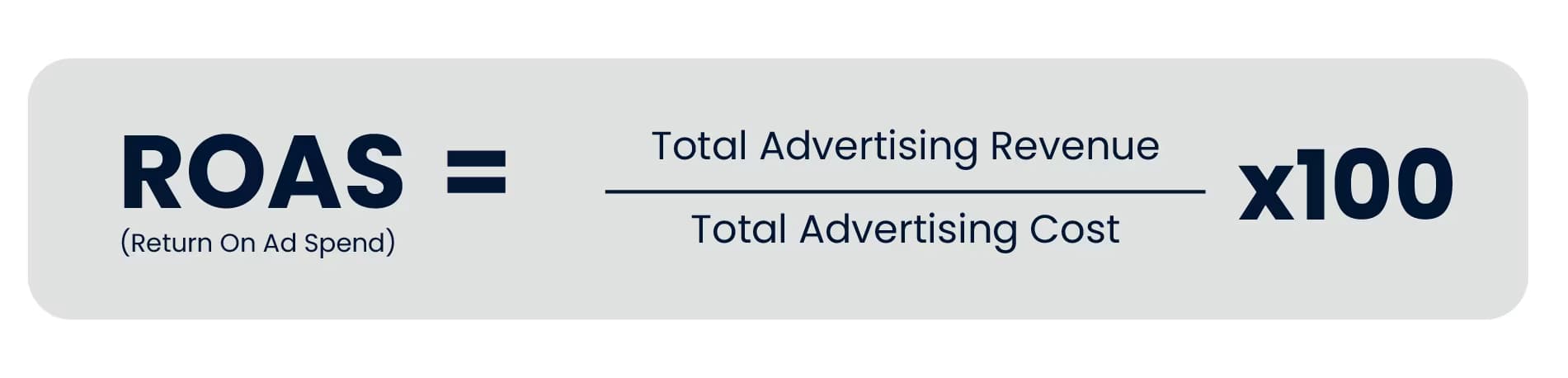
In the above example, the ROAS can be represented as 400 %.
Key Considerations When Calculating ROAS for E-Commerce
When calculating ROAS, e-commerce ad spend go beyond just ad spend. Ensure you account for:
- Vendor and Platform Fees: If you're using third-party platforms or vendors, include any fees or commissions they charge for campaign management, media buys, or other services.
- In-House Advertising Costs: Don't forget salaries or expenses for your internal marketing team that contribute to campaign efforts.
- Affiliate Commissions: Include commissions paid to affiliates, as well as any transaction fees for networks or platforms used.
- Clicks and Impressions: Track metrics like cost per click (CPC), total clicks, and cost per thousand impressions (CPM) to gauge the true cost-effectiveness of your campaigns. These factors help provide a clear picture of your ROAS in e-commerce.
Challenges With ROAS Calculation in E-Commerce
We now know that measuring ROAS is pretty straightforward. Still, businesses encounter some difficulties while calculating the return on ad spend. Let us explore the common challenges e-commerce businesses face while measuring ROAS.
Inefficient Audience Tracking
It is essential for your e-commerce business to track its customers to ensure that you made the purchase after viewing an ad. Therefore, robust tracking systems are needed to verify that someone bought a product after watching an ad. This is often impossible for businesses that place ads on TV, billboards, or radio, which are still difficult to track.
Impact Of Other Touchpoints
A customer journey usually spans various touch points before they make a purchase. Most businesses invest in improving customer engagement at all these touch points, which could also encourage the customer to complete the purchase. However, ROAS solely focuses on ads, often overlooking other touch points' effect on the customer's purchase.
Customer Behaviour
It is not likely that customers will make a purchase as soon as they see an ad. It may take several hours or days for them to purchase a product after viewing an ad. So, if the e-commerce business measures the ROAS of its campaigns before the customer makes the purchase, it might not be effectively measuring the true ROAS.
Factors That Affect ROAS in E-Commerce
It is essential for e-commerce businesses to be careful of these factors that can affect ROAS.
- Relevance And Quality of Ads: It is important for an ad to be of good quality and relevant to be effective. Ensure your ad appropriately communicates the business's value proposition and speaks to the right target. Only then will it bring more clicks and sales.
- It is important for an ad to be of good quality and relevant to be effective. Ensure your ad appropriately communicates the business's value proposition and speaks to the right target. Only then will it bring more clicks and sales.
- Target Audience Segmentation: E-commerce companies using Facebook or Google can target customers based on demographics, behaviors, and interests. Effective targeting depends upon the identification of the customer base and segmenting them according to behaviour.
- If you sell products for toddlers and babies, it is important that your ads target new parents. Make sure that you segment your customers by their behavior, location, and interest so that the voice of your ads really speaks to their preferences.
6 Tactics To Improve ROAS in E-Commerce
Are you an e-commerce business trying to improve the return on ads? These strategies will help you out.
1. Improve the Quality and Relevance of Ad Creatives
As we said, the quality and relevance of ads make a huge difference in their performance. You can experiment with different formats for your ads and send messaging to see what works well with your target audience. You can also use different-coloured images and CTAs in your ads and optimise them.
Based on your findings, you will be able to optimise ad creative to meet your customers' interests.
Pro Tip: Ensure consistency with ad creatives that match your brand's style and message. Use solid CTAs and interactive content like polls and quizzes to improve customer engagement.
2. Better Bidding Strategy
Another important factor that impacts ROAS is the bidding strategy. An e-commerce business must adjust its bids based on factors such as device usage and demographics. This helps them see which generates the best result and optimise them based on the likelihood of conversion.
Pro Tip: Research your objectives and select a bidding strategy that best fits them. The Google Draft & Experiments function allows you to A/B test your bidding strategy. Be patient and wait for sufficient data to make an informed choice regarding your bid revisions.
3. Funnel/Drip Campaigns
A funnel/drip campaign is a series of automated emails that you send to your customers based on their actions on your e-commerce website. You decide the number of emails to send and can also personalize the messages with data relating to an individual customer or the action they took.
With a tool like TechMonk, you can implement drip marketing campaigns for the following events across the funnel.
- Order Placed
- Order Cancelled
- Order Delivered
- Abandoned Checkout
- COD to Prepaid
- Abandoned Carts
To improve the ROAS, you can implement abandoned cart drip campaigns. The reminders for abandon cards encourage your customers to return and complete their purchase.
It is essential to send abandoned cart emails at the right time. For instance, you can send cart reminders within a few hours or days of abandonment, which will help you recapture the customer's interest. You can also give them incentives and discounts on the items in the cart to encourage them to complete the purchase.
Here are some benefits of cart abandonment emails in bringing back customers.
Abandoned Cart Recovery Statistics
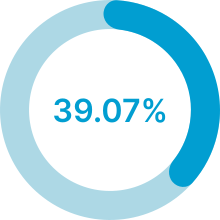
Open rate for abandoned cart emails.
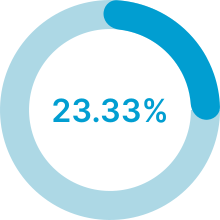
Click-through rate for abandoned cart emails.
4. Target Audience Selection
It is important for a business to choose its target audience so the ads reach the right customers. E-commerce businesses can dive into customer data to better understand customer behaviours and preferences. They can use this data to refine the audience targeting. It is also possible to find similar customers to existing ones to increase the likelihood of converting them.
Pro Tip: With a tool like TechMonk, you can target the right customers by segmenting them based on customer behaviour. TechMonk creates segments based on RFM of events and lets you create customer cohorts for target audience selection.
5. Retargeting Campaigns
You can implement retargeting ads to reengage users who previously interacted with your business. For example, they might have previously visited your e-commerce website and added items to the cart. These ads, targeted towards them, remind them of your brand, creating an opportunity to convert.
According to I-COM, retargeted uses in B2C e-commerce are 499% more likely to convert with a 30% higher average order value.
Pro Tip: Use a tool like TechMonk to retarget customers with two-way conversational campaigns targeting customers who abandon carts, abandon carts, and cancel orders.
6. Finding the Best-Performing Channels For Ad
You can use Google Analytics to find the ad channels that generate the most revenue. Then, you can focus on advertising on these channels and remove those not producing the desired ROI.
Here is a visual representation of social media platforms that offer high ROI to marketers.

Pro Tip: Investigate how your competitors use various digital advertising platforms and look for possibilities to differentiate your strategy.
7. Empower Targeted Ads With TechMonk
TechMonk is the ultimate solution for e-commerce businesses to improve ROAS through targeted ads. Most e-commerce companies fail to target the right audiences as they don't have a complete 360-degree view of their customers. This is because their customer data is spread across data and intelligence silos.
TechMonk integrates with your e-commerce website, customer communication channels, logistics partners, CRM and Social Media. Its customer data platform gathers customer data from all these platforms. This CDP for e-commerce further builds up customer intelligence from your ongoing events and campaigns.
With all this customer data, TechMonk efficiently micro-segments your customers based on e-commerce customer behaviour. During the initial setup of TechMonk, you can integrate it with your Google Ads and Facebook account. Therefore, TechMonk lets you target the right audience with suitable ads through Facebook and Google Sync.
Here is how you can do it on TechMonk.
- Step 1: Launch Segments from TechMonk's left sidebar and choose the Create Segment button from the top of the screen.

- Step 2: Enter the segment details and turn on the toggle next to Sync with Facebook and Sync with Google options.

- Step 3: Finally, choose the Save button to save the segment. This will help you reach these customers by targeting ads on Google and Meta.
You can then create AI marketing campaigns for these segments.
Target The Customers With Ads That Align With Their Interests.
ROAS And Other Metrics in E-Commerce
Let us look at how ROAS varies from other similar metrics.
ROAS and ROI
ROI stands for Return on Investment, which focuses on more factors contributing to the costs of ads than ROAS. Let's compare them to understand them better.
| Factor | ROAS | ROI |
|---|---|---|
| What it Measures? | It measures the revenue generated only from the ad spend of campaigns. | It measures the overall profitability of the ad campaign, considering all involved costs. |
| Focus | How effectively ad-spend translates to revenue | How profitable the entire ad campaign is. |
| Unit of Measure | Expressed as a ratio | Expresses as a percentage |
| Use Case in Campaigns | Assessing if ad platforms like Google Ads generate sufficient revenue. | Evaluating if the campaign was worth the investment. |
| Optimisation | Helps refine ad budget allocation and strategies | It helps decide if similar campaigns should be run in the future. |
ROAS and CPA
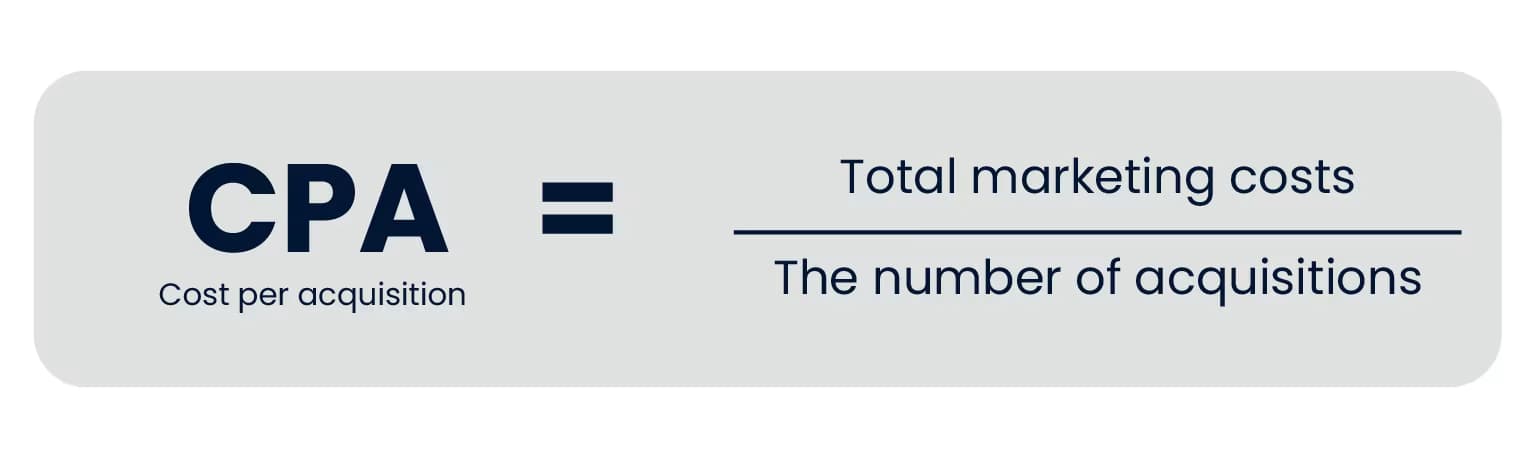
CPA stands for Cost Per Acquisition. This metric measures the amount an e-commerce business spends on acquiring a customer through ads. Here is the formula for CPA.
ROAS and CAC
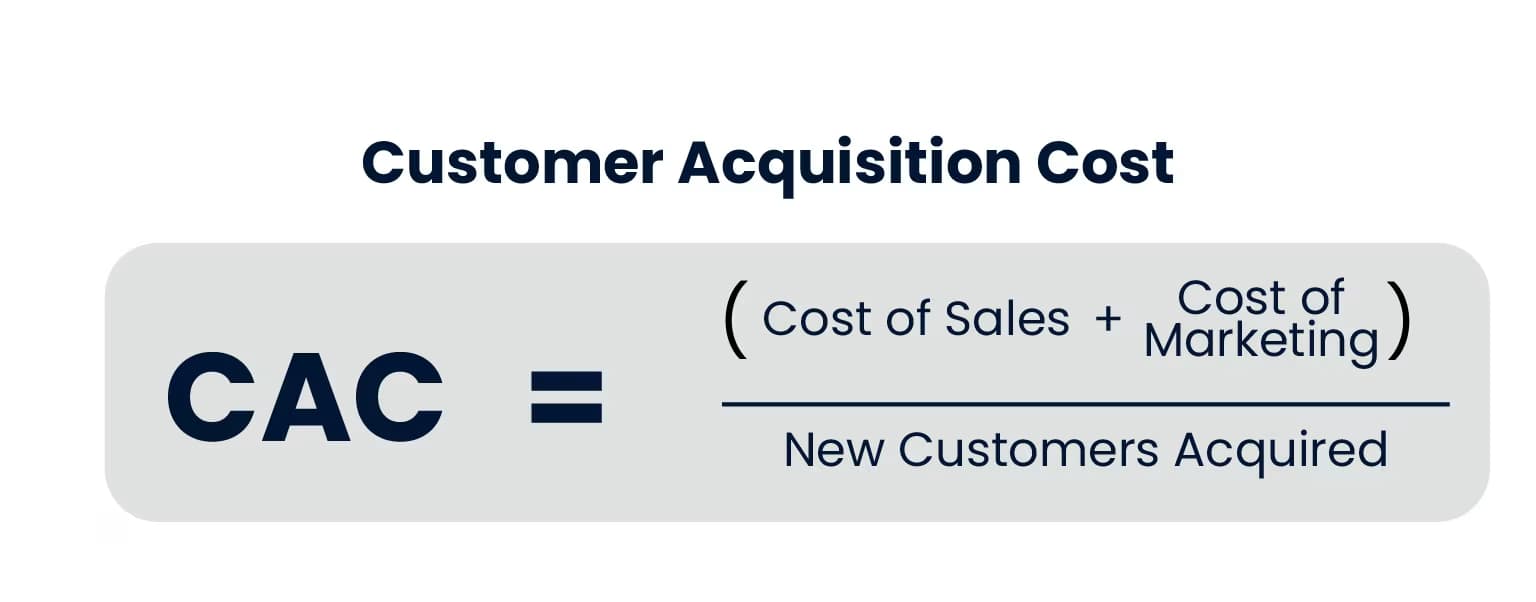
CAC, or Customer Acquisition Cost, measures the average amount a business invests in acquiring customers. This also reflects sales and marketing expenses.
Here is the formula to measure CAC.
ROAS and CTR
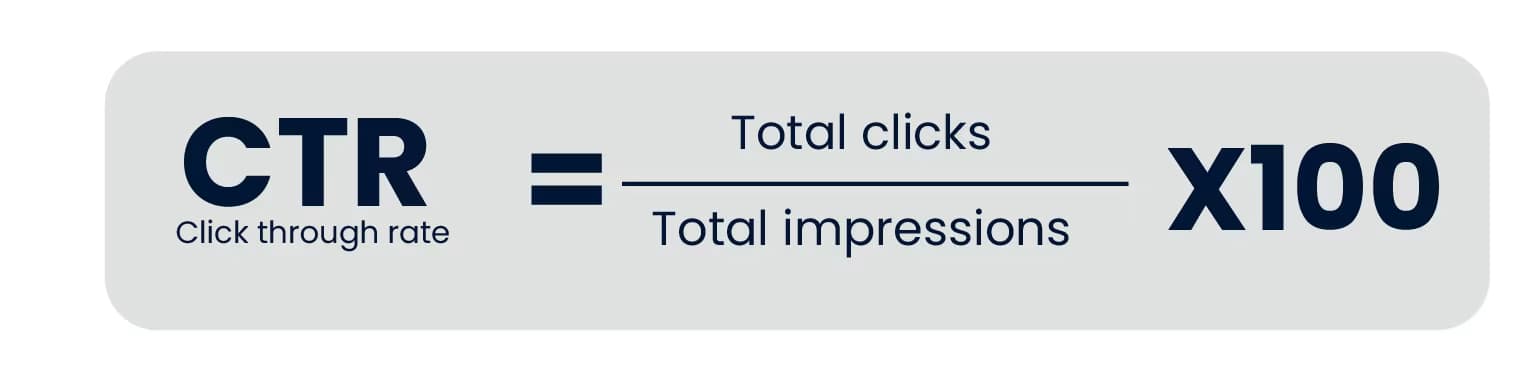
CTR is short for click-through rate, and it measures the number of prospects who click on an advertisement. These prospects don't have to purchase the e-commerce business. It denotes that the ad was relevant, but some other factor prevented the customer from completing a purchase.
Building Strong AI Capital with TechMonk
At TechMonk, we empower businesses by helping them build strong AI capital, leveraging enterprise-grade AI agents and tools that seamlessly integrate into existing workflows. These AI-powered solutions not only enhance operational efficiency but also support your human capital, enabling your team to shift their focus on high-value tasks while AI works on the repetitive ones.
TechMonk uses deep customer intelligence to provide a complete, 360-degree view of customer behaviour and intent. This valuable insight helps you design personalized experiences and foster loyalty at every touchpoint, ensuring your customers feel understood throughout their journey.
Engage and Convert with TechMonk's AI Sales Agent
When it comes to engaging potential customers, especially those clicking on Click2WhatsApp ads, TechMonk's AI Sales Agent takes the lead. Here's how it works:
- Personalised Engagement: The AI Sales Agent collects relevant customer details and recommends products based on their interests and past behavior.
- Effortless Conversions: It seamlessly schedules site or in-store visits, creating a frictionless experience that moves customers through the buying funnel with ease.
- Customer-Centric Flow: The AI guides customers step-by-step, ensuring they never feel lost and always know the next best action to take.
Pre-Built AI Agents for E-Commerce Workflows
TechMonk offers a suite of pre-built AI agents that are designed to handle crucial tasks across multiple sectors, improving efficiency and boosting customer lifetime value.
- AI Sales Agent: Think of it as your trusted sales assistant. It tracks customer actions and provides personalised product suggestions, resulting in smoother transactions and repeat purchases.
- AI Support Agent: This agent provides instant, accurate customer support. It resolves queries, handles self-service tasks, and reduces pressure on your support team, elevating the customer experience.
- Voice AI Agents: The Voice AI Agent delivers natural conversations over calls and messaging platforms like WhatsApp. Available 24/7, it builds stronger customer relationships with multilingual support.
Want to Build a Custom AI Agent?
If your needs go beyond what pre-built agents offer, TechMonk's AgentMonk lets you create custom AI agents tailored to your specific workflows, tasks, and goals. With our intuitive tools, setting up your own agent is simple and efficient.
- Tools Library: A collection of ready-to-use tools that empower AI agents to perform specific actions. You can also build custom tools as your business evolves.

- Agents Library: Browse and use a wide array of pre-built AI agents, or customise one with just a few clicks to suit your brand and objectives.

- Agent Flow: TechMonk ensures all your agents work in harmony, orchestrating tasks efficiently to maintain a fast, seamless experience for your customers.
How TechMonk Ensures Your AI Agents Perform Seamlessly
TechMonk supports your AI agents with features that ensure they're safe, reliable, and continually improving.
- Guardrails: Protect your conversations with secure, safe responses, blocking harmful interactions.
- Observability: Monitor AI agents in real-time, allowing you to tweak and improve their performance quickly.
- Traceability: Keep a log of all actions for transparency and continuous improvement.
- Performance Tracking: TechMonk offers detailed analytics to help you measure and refine agent performance.
- Automated Testing: Run pre-launch tests to ensure your AI agents work as expected and provide seamless service.
Want to Build AI Agents in Just 3 Steps?
- Choose Prebuilt Tools or Build Custom Tools
- Choose Prebuilt AI Agents or Custom AI Agents
- Build Custom Agentic Workflows to Automate Operations
Why TechMonk's AI Agents Are Unmatched?
TechMonk gives you a strong customer engagement toolkit that supports its AI agents and delivers steady value over time. You might ask what makes this approach work so well. TechMonk brings together data, intelligence, and automation to help you improve customer lifetime value at every stage.
- Customer Intelligence Platform: With TechMonk, you see all your customer information in one place. It connects profiles, purchase behaviour, and engagement history. This helps you spot patterns and intent more clearly. How does this help you act faster? You can deliver personal and targeted experiences that keep customers engaged.
- AI-Driven Campaigns: TechMonk makes campaign management simple through clear AI-based automation. You create personal offers for customer groups based on age, location, or behaviour. This helps you reach the right customer segments with the right message.
- Journey Builder: TechMonk offers a Journey Builder that helps you design smooth and personal customer journeys with ease. You may wonder how this improves daily engagement. AI guides each touch point and keeps interactions relevant.
Conclusion
You now know what ROAS is and how you can effectively improve it. E-commerce businesses need to measure ROAS to determine whether the ad campaigns work and what works with the target audience. It also helps them to optimise ad campaigns, converting prospects and turning them into loyal customers.
TechMonk is the ideal companion for all e-commerce business concerns, including ad campaign performance. It allows e-commerce businesses to target the right customer segments in the campaigns. TechMonk also brings all the tools for e-commerce businesses under the same roof.
Wish to know how TechMonk can help you with improving ROAS? Get on a call with us now!
Boost The ROAS of Your Ad Campaigns With A Tool That Targets The Right Customer Segments
Book DemoFrequently Asked Questions
Have another question? Please contact our team!
You can calculate ROAS by dividing total advertising revenue by the total advertising cost. You can also represent it as a percentage by multiplying the ROAS with 100.